

A Historical Incident That Inspired Patriotic Awakening
“Vande Mataram” is more than a song – it is a sacred expression of devotion to Bharat Mata and a timeless symbol of India’s freedom movement. For generations, these powerful words have inspired courage, unity, and patriotism among Bharatiyas.
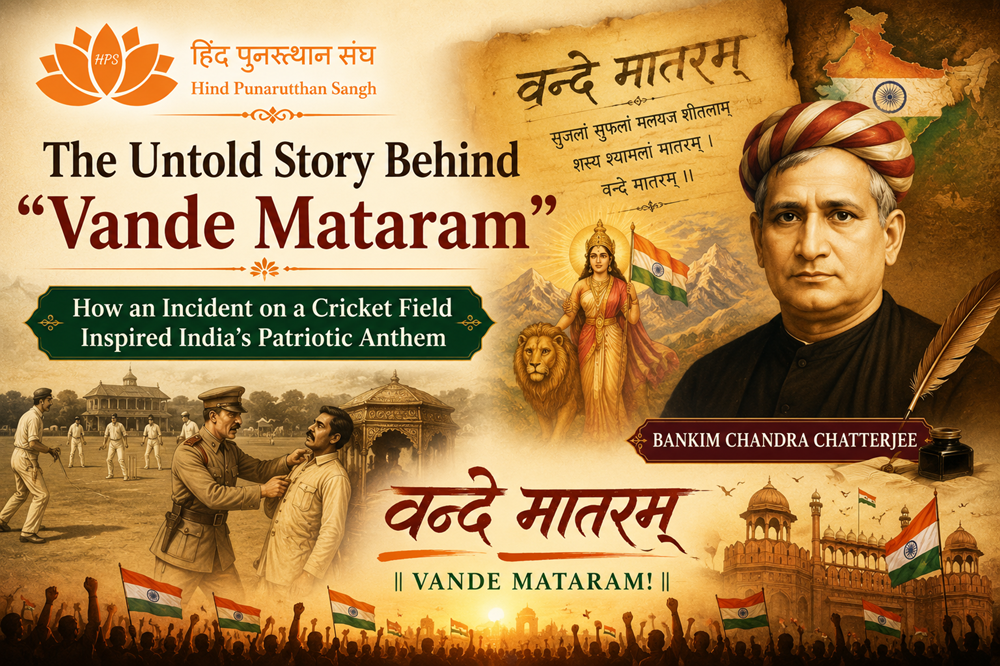
While the song became nationally renowned through Anandamath by Bankim Chandra Chatterjee, few people are aware of an incident that is believed to have deeply influenced his patriotic awakening.
The Berhampur Incident
According to several historical accounts, an important event took place in Berhampur, West Bengal, around 1873-74 during British rule.
At that time, Bankim Chandra Chatterjee was serving as the Deputy Collector of Murshidabad district. One evening, while returning home in a palki (palanquin), the bearers accidentally crossed a cricket field at Barrack Square (present-day Square Field), where British officers were playing.
The interruption reportedly angered Colonel Duffin, a British military officer stationed at the Berhampur Cantonment. Historical narratives state that he stopped the palki and publicly insulted and assaulted Bankim Chandra Chatterjee.
Several prominent individuals are said to have witnessed the incident, including British and Bhartiya dignitaries present at the ground.
Standing Against Injustice
Rather than remaining silent, Bankim Chandra Chatterjee reportedly chose to seek justice through legal means. He filed a complaint against Colonel Duffin in the Murshidabad court.
Though many British officials allegedly denied the incident during the proceedings, some witnesses supported Bankim Babu’s version of events. Historical accounts mention that the matter eventually concluded with Colonel Duffin issuing a public apology in court.
For many Bharatiyas living under colonial rule, this episode became symbolic of resistance against humiliation and injustice.
A Turning Point in Patriotic Thought
Following the incident, Bankim Chandra Chatterjee spent time in Lalgola, where he is believed to have reflected deeply on the condition of Bharat under foreign rule.
During this period, he visited temples dedicated to Jagaddhatri, Durga, and Kali, and contemplated how Bharat could be spiritually and culturally united. Historians and traditional narratives suggest that these experiences contributed significantly to the patriotic ideas that later found expression in “Vande Mataram.”
Although historians differ on the exact timeline and circumstances of the song’s composition, many believe that the Berhampur incident played an important role in shaping Bankim Babu’s nationalist vision.
“Vande Mataram” and National Awakening
The song later appeared in Anandamath, first serialized in the Bangadarshan magazine and published as a complete novel in 1882. “Vande Mataram” soon became a powerful anthem of Bharat’s freedom struggle.
Freedom fighters, revolutionaries, and patriots across Bharat drew inspiration from its words. The song awakened a deep emotional connection to the motherland and became a rallying cry against colonial rule.
A Legacy That Lives On
More than a century later, “Vande Mataram” continues to inspire national pride and devotion to Bharat Mata. The story associated with its inspiration reminds us that moments of injustice can awaken powerful movements for truth, dignity, and freedom.
Whether viewed as history, inspiration, or patriotic memory, the legacy of “Vande Mataram” remains eternal in the hearts of millions of Bharatiyas.
Vande Mataram!
The history of Vande Mataram was not made available hitherto as these types of instances were buried to the Public view. A simple mistake of entering into a cricket field was taken as a prestige and Sri. Bankim da who was the Collector at that time
was slapped in the public.Thank you for bringing out this incident which paved the way for the bedrock foundation for the freedom struggle of country
The history of Vande Mataram is very fascinating and thank you for bringing such instance which was not heard before.
The article is very interesting to read.
Please bring out more of such unknown instances.
Thank you for such a beautiful article.
.This instance shows the Slavery practices at that time by the British administration